Key Takeaways
What you'll learn in this article
- 1Both platforms can support premium interiors — the better choice depends on configuration, layout, service access, and budget, not the badge
- 2Small dimension differences can affect a lounge, cabinet, seat spacing, or luggage area
- 3The completed van must account for the full build weight — ask for a weight plan
- 4Map qualified chassis service near home and common travel routes before deciding
- 5Price the complete vehicle, not the empty chassis
Table of Contents
Mercedes-Benz Sprinter and Ford Transit vans can both support premium custom interiors. The better platform depends on the exact wheelbase, roof, drivetrain, payload, local service access, layout, budget, and owner preference — not simply the brand.
Before choosing a chassis for a luxury van conversion, ask the builder to compare actual configurations that can support your floor plan.
Brand and Design Goals
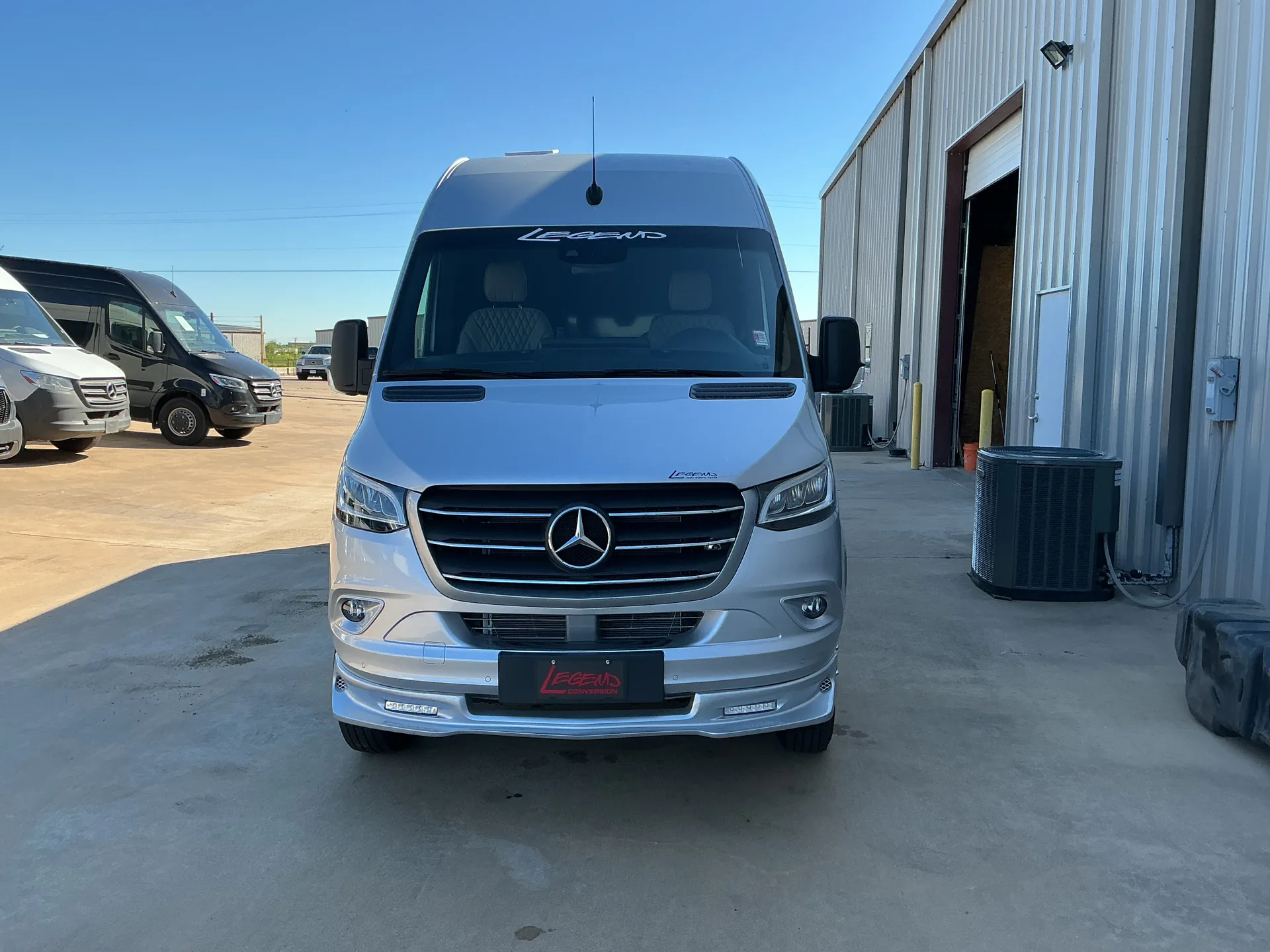
The Sprinter has strong recognition in the premium conversion market and is available in configurations frequently used by luxury builders — see our dedicated Mercedes Sprinter conversion page. The Transit has broad Ford service familiarity and its own range of roof, length, and drivetrain options. Availability and specifications change by model year, so confirm current manufacturer data rather than relying on an old comparison chart.
Interior Dimensions and Floor Plan
Compare usable floor length, standing height, wall shape, door openings, wheel-well placement, and the space consumed by insulation and finish materials. A difference that looks small on a specification sheet can affect a lounge, cabinet, seat spacing, or rear luggage area.
Payload and Systems
The completed van must account for passengers, seats, cabinetry, HVAC, batteries, entertainment, water or refrigeration where used, luggage, and options. Ask for a weight plan and confirm that the chosen chassis configuration supports the intended build.
Drivetrain and Driving Environment
Discuss typical terrain, weather, parking, highway mileage, towing if applicable, and who will drive. Available powertrains and drivetrains vary by year and configuration. Test-drive comparable vehicles before deciding.
Service and Long-Term Ownership
Map qualified chassis service near home and common travel routes. Ask how warranty work on the OEM chassis is separated from service on conversion components. Consider parts availability, maintenance schedules, insurance, resale audience, and where the vehicle will be stored.
Ask to see completed examples on the same chassis, not just renderings. Review how the builder handles seat mounting, electrical routing, HVAC, windows, trim, service panels, and OEM-system integration.
A Practical Decision Process
- Define passengers, travel use, luggage, and essential features.
- Draft the floor plan.
- Compare compatible chassis configurations.
- Review payload and system requirements.
- Test-drive both platforms where possible.
- Compare local service and ownership costs.
- Price the complete vehicle, not the empty chassis.
Read our luxury van seating layout guide before locking the wheelbase, and use the conversion cost guide to compare complete proposals.
Both platforms can be excellent. The right decision is the one that supports the finished vehicle and how the owner will use it.
Compare chassis for your floor plan: Request a custom build consultation.
Frequently Asked Questions

Written by
Kent Ellington
Founder & CEO, Legend Conversion Corp
Kent Ellington brings over 31 years of experience in the RV and conversion industry to every build. As the founder of Legend Conversion Corp in Alvarado, Texas, he has personally overseen hundreds of custom Sprinter van conversions for executives, families, and commercial operators nationwide.