Key Takeaways
What you'll learn in this article
- 1The 144" wheelbase is 3'4" shorter overall, fits in standard parking spots, and gets 2-4 MPG better fuel economy
- 2The 170" provides 3.5 extra feet of interior length — enough for a bathroom, bunk beds, or a dedicated office space
- 3For couples and solo travelers who prioritize city drivability, the 144" is the clear winner
- 4For families with kids, full-time living, or executive builds with bathroom, the 170" is essential
- 5Both wheelbases share the same engine, safety features, and 6'3" interior standing height
Table of Contents
Side-by-Side Specifications
Let's start with the raw numbers. Both the 144" and 170" wheelbases use the same Mercedes-Benz Sprinter platform, engine, and safety systems. The difference is purely in length.
| Specification | 144" Wheelbase | 170" Wheelbase |
|---|---|---|
| Overall Length | 19'6" | 22'10" |
| Interior Cargo Length | ~12' | ~15.5' |
| Interior Width | 5'8" | 5'8" |
| Interior Height (High Roof) | 6'3" | 6'3" |
| Curb Weight | ~6,900 lbs | ~7,200 lbs |
| Payload Capacity | ~3,770 lbs | ~3,290 lbs |
| Fuel Economy | 18-22 MPG | 14-18 MPG |
| Turning Radius | ~36.7' | ~41.3' |
| Standard Parking Spot | Yes | Tight/No |
| Base Van Cost (2026) | ~$55,000 | ~$58,000 |
The 3.5 feet of additional interior length in the 170" may not sound like much on paper. In practice, it's the difference between "I wish we had room for X" and "everything fits perfectly."
The Driving Experience
144" — Drives Like a Large SUV
The 144" Sprinter is remarkably car-like to drive. It fits in standard parking spots, navigates urban streets easily, and feels comfortable on mountain roads. Most first-time Sprinter drivers are surprised at how manageable it is.
Best for: Daily driving, urban parking, mountain roads, gas stations
170" — Drives Like a Short Bus (But Better)
The 170" adds noticeable length. Parking requires more awareness, U-turns need more room, and some tight campground spots won't work. However, on the highway — where you spend most driving time — there's virtually no difference.
Best for: Highway driving, campground parking, RV parks
Our recommendation: If you'll use your van as a daily driver in a city, the 144" will reduce stress significantly. If it's primarily a weekend/trip vehicle, the 170" is worth the extra maneuvering effort. Read our guide to best layouts to see how the extra space gets used.
Interior Space Comparison
The interior length difference opens up significant layout possibilities:
What 3.5 Extra Feet Gets You
With a 170", you can add ONE of these that wouldn't fit in a 144":
- A wet bathroom (toilet + shower) — adds ~2.5' to the floorplan
- A bunk bed section for children
- A dedicated home office behind the cab
- A rear garage large enough for two full-size mountain bikes standing up
- A larger galley kitchen with oven and full-size sink
For families who need sleeping space for kids, the 170" is almost always the right choice. The Vansmith and El Kapitan both offer family builds on the 170" wheelbase for this exact reason.
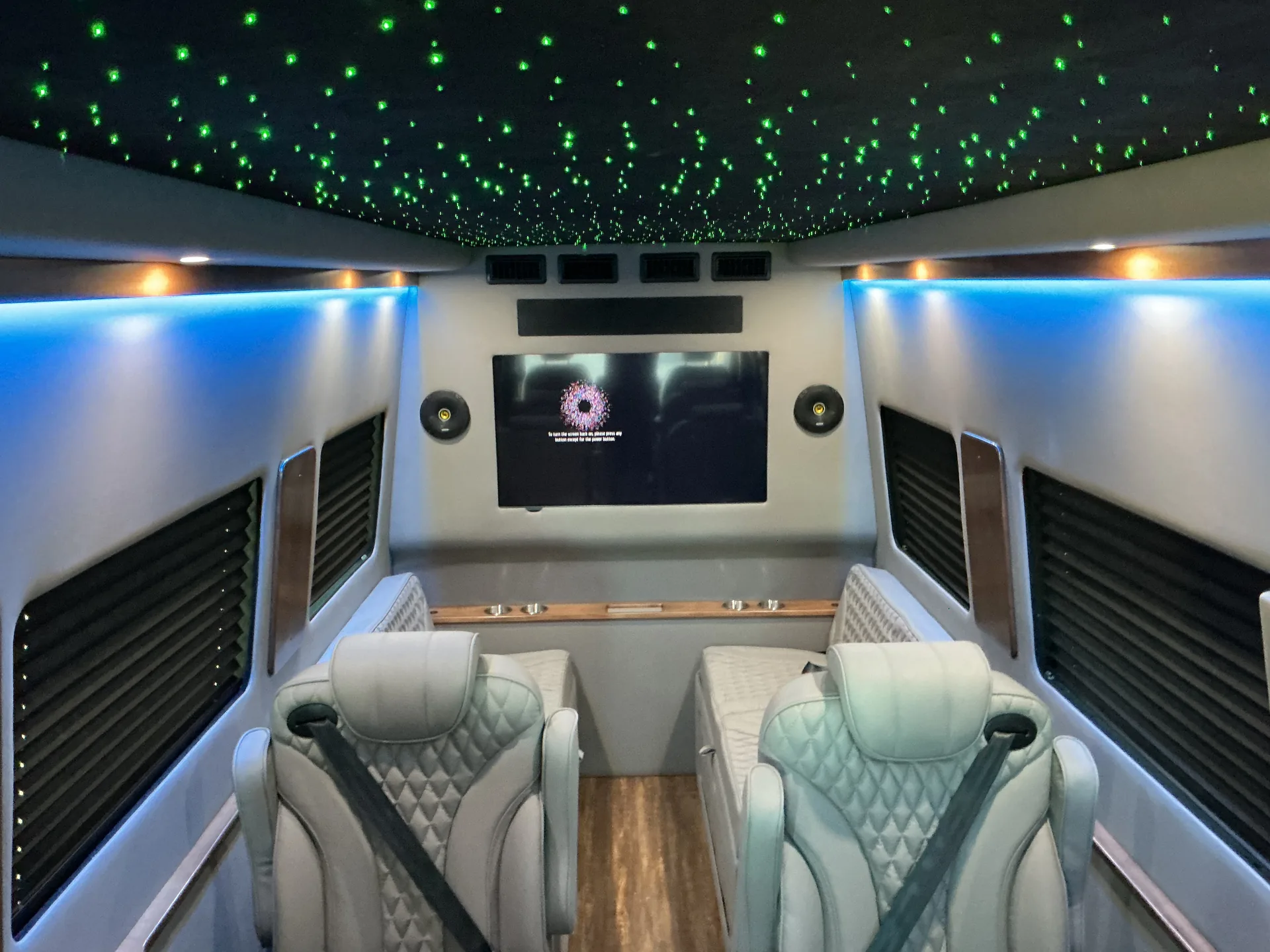
For executive use cases, the 170" allows 4+ captain's chairs plus a wet bar and entertainment center, whereas the 144" typically limits you to 2-3 rear seats.
Who Should Choose the 144"
The 144" is your van if:
- You're a couple or solo traveler who prioritizes mobility
- You plan to use it as a daily driver and park in standard spots
- You value fuel efficiency (18-22 MPG vs. 14-18 MPG)
- You prefer lighter, more agile handling on mountain and backcountry roads
- You don't need a bathroom or bunk beds
- Your budget is tighter (lower base van cost + lower conversion cost)
Best 144" Builds We've Done
- The Legend Explorer — Rear bed, mid-galley, two-person adventure van ($89,000)
- Weekend Warrior — Convertible dinette + rear garage for bikes ($85,000)
- Urban Professional — Mobile office with fold-down bed ($95,000)
Who Should Choose the 170"
The 170" is your van if:
- You're a family with children who need multiple sleeping areas
- You want a bathroom (toilet, shower, or both)
- You plan for full-time or extended travel and need maximum space
- Your primary use is executive transport with 4+ passengers
- Storage space is critical (large gear, luggage, supplies)
- You need a mobile office with separate work and living zones
Best 170" Builds We've Done
- The Legend Boss — 4-seat executive with privacy partition ($155,000)
- The Legend Traveler — Family van with bunks and bathroom ($129,000)
- The Legend Limo — 6-8 seat executive limousine ($135,000)
Cost Differences
| Cost Category | 144" | 170" | Difference |
|---|---|---|---|
| Base Van (2026 Sprinter) | ~$55,000 | ~$58,000 | +$3,000 |
| Conversion (mid-range) | $50,000-$90,000 | $60,000-$120,000 | +$10,000-$30,000 |
| Insulation & Soundproofing | $3,500-$5,500 | $4,500-$7,000 | +$1,000-$1,500 |
| Annual Fuel Cost (15K mi) | ~$3,400 | ~$4,200 | +$800/yr |
| Insurance | ~$2,200/yr | ~$2,400/yr | +$200/yr |
The 170" costs $15,000-$35,000 more overall. Whether that's worth it depends entirely on what you'll do with the extra space. If you need a bathroom or bunk beds, there's no substitute for length.
For detailed financing options, read our dedicated guide. And use our Build Your Van configurator to compare total costs for both wheelbases.
Frequently Asked Questions

Written by
Legend Conversion Team
Custom Van Specialists
The Legend Conversion team combines decades of expertise in automotive engineering, interior design, and luxury vehicle customization. Based in Alvarado, Texas, our specialists are dedicated to transforming Mercedes-Benz Sprinter vans into extraordinary vehicles.